
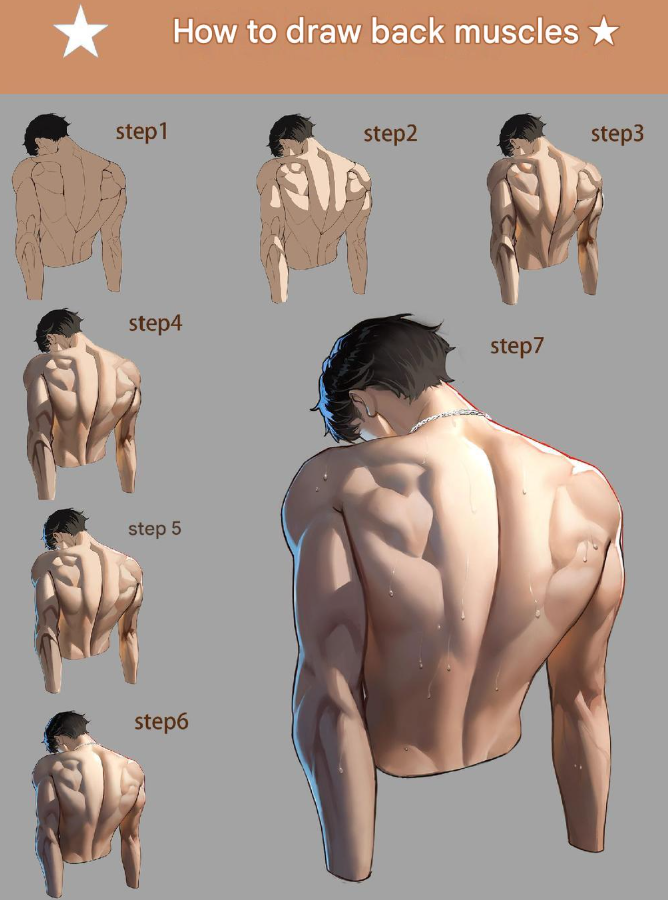
In this tutorial, you will learn how to draw a muscular male back in 7 easy steps, starting with the basic body structure and finishing with detailed muscles, shading, and highlights.
How to Draw Back Muscles – Step-by-Step Drawing Tutorial for Beginners
Step 1: Sketch the Basic Back Structure
Start by drawing the general shape of the upper body from behind. Lightly sketch the head, neck, shoulders, arms, and torso.
Focus on the overall proportions rather than small details. Use simple curved lines to establish the body’s silhouette and create a natural shoulder-to-waist shape.
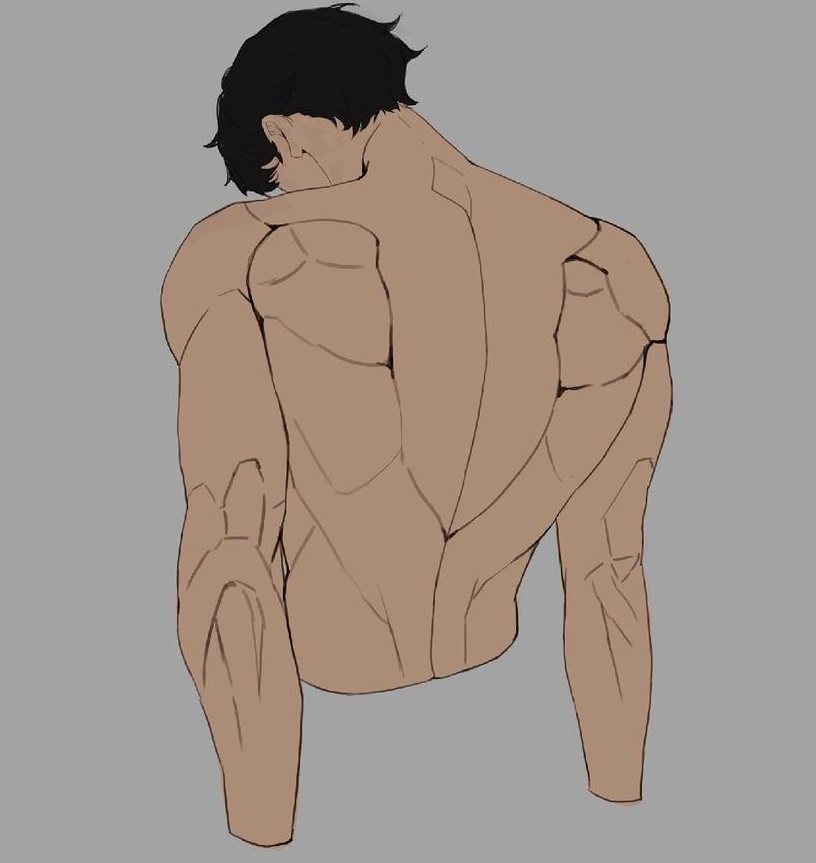
Step 2: Draw the Main Back Muscles
Begin identifying the major muscle groups of the back.
Sketch the trapezius muscles around the neck and upper shoulders, then outline the broad latissimus dorsi muscles on both sides of the spine.
Add the basic shapes of the rear shoulders and shoulder blades. Use curved lines to make the muscles look connected and natural.
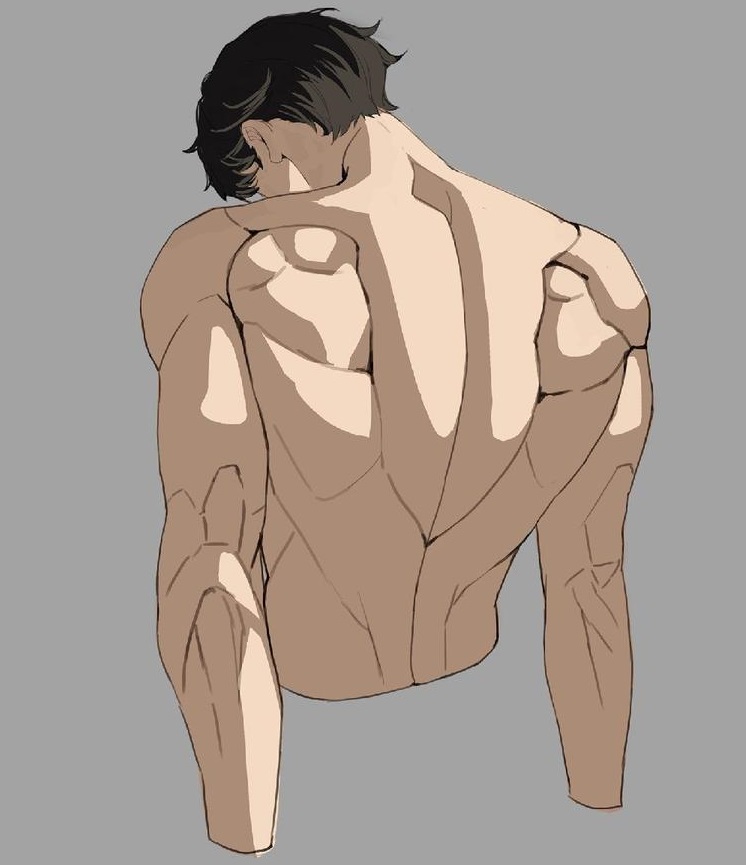
Step 3: Define the Muscle Anatomy
Now refine the muscle structure by adding more anatomical details.
Pay attention to the trapezius, rhomboids, latissimus dorsi, and rear deltoids. Separate the different muscle groups using smooth, flowing lines.
Remember that muscles should follow the natural direction of the body rather than appearing as random shapes.
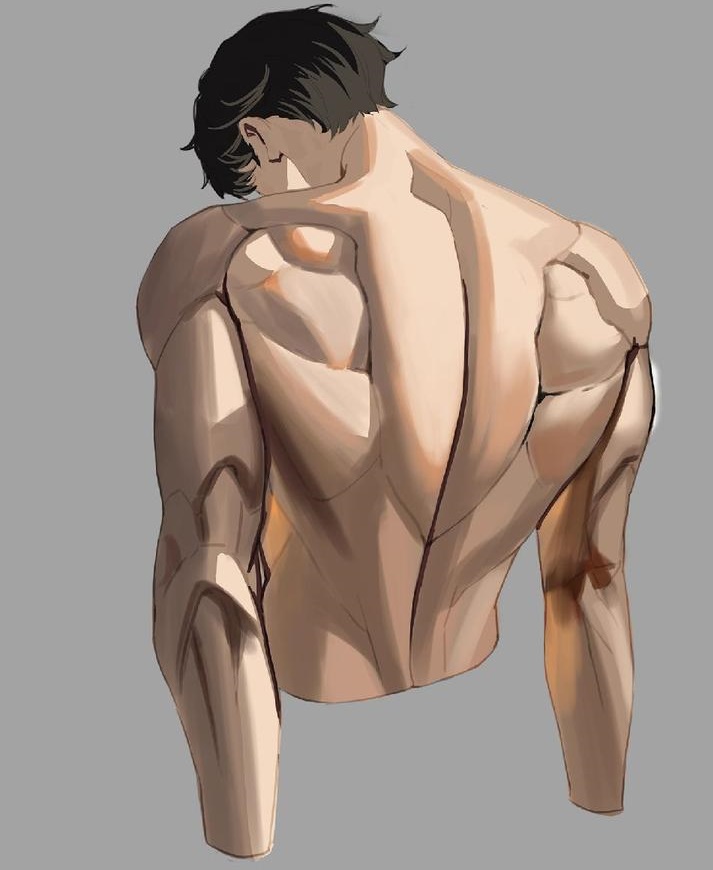
Step 4: Add Muscle Depth and Definition
Start making the back look stronger and more three-dimensional.
Darken selected muscle boundaries and add curved lines around the shoulder blades, upper back, and sides of the torso.
Use a combination of thick and thin lines to create depth. Avoid making every muscle line equally dark, as this can make the drawing look unnatural.
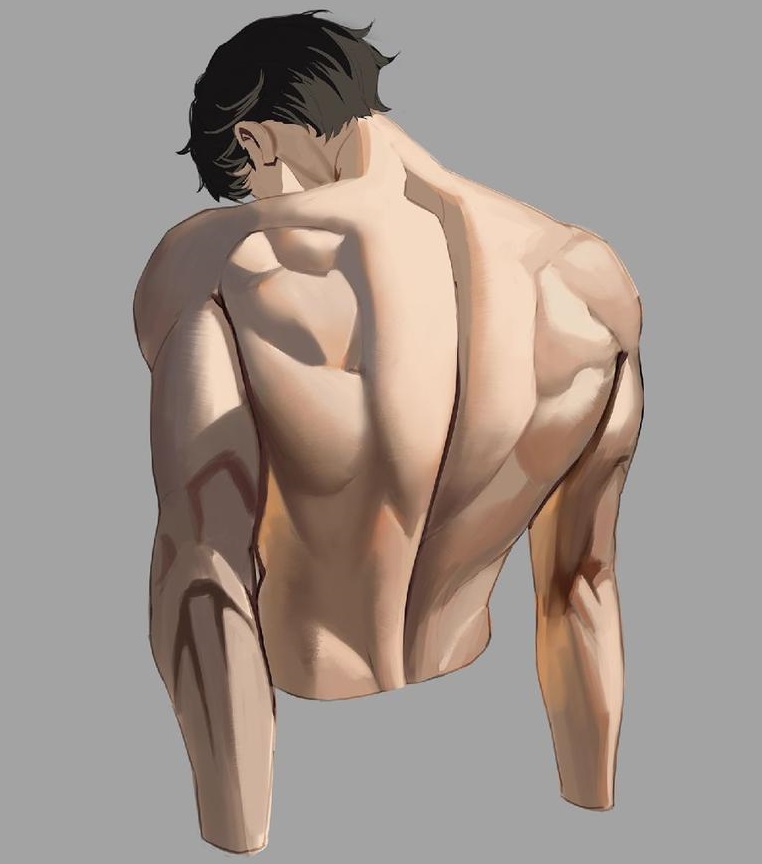
Step 5: Refine the Body Shape
Carefully improve the proportions and overall silhouette.
Adjust the shoulders, arms, waist, and back muscles to create a balanced and athletic appearance.
Erase unnecessary construction lines and smooth out the muscle transitions. Pay particular attention to the connection between the shoulders and upper arms.
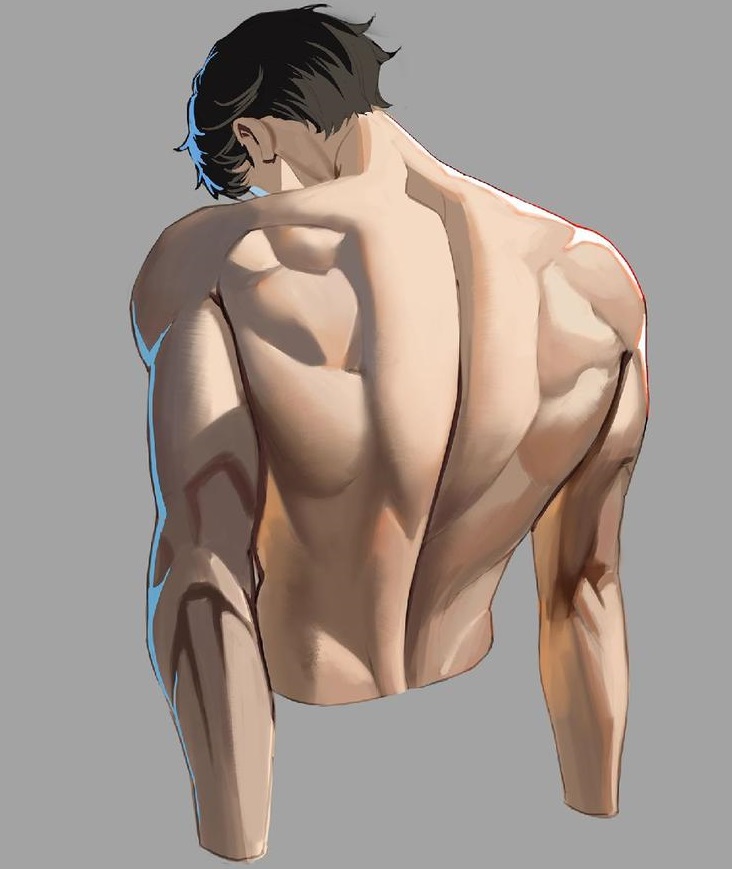
Step 6: Apply Shadows and Highlights
This step brings your drawing to life.
Add darker shadows underneath the shoulder muscles, along the spine, and around the lower edges of the back muscles.
Use lighter tones on raised muscle surfaces to create the appearance of volume. Blend the shadows smoothly to achieve a realistic three-dimensional effect.
Remember that the direction of your light source determines where the highlights and shadows should appear.
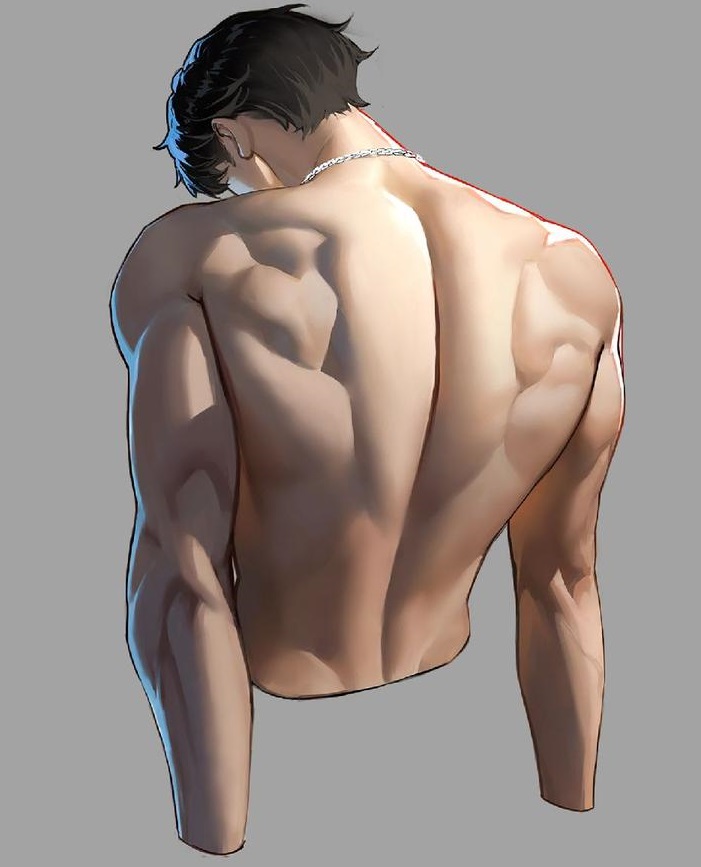
Step 7: Add the Final Details
Finish your drawing by refining the hair, neck, shoulders, arms, and individual muscle details.
Add subtle highlights to the upper back and shoulders, then deepen selected shadows to emphasize muscle definition.
Clean up the remaining sketch lines and make any final adjustments to the proportions.
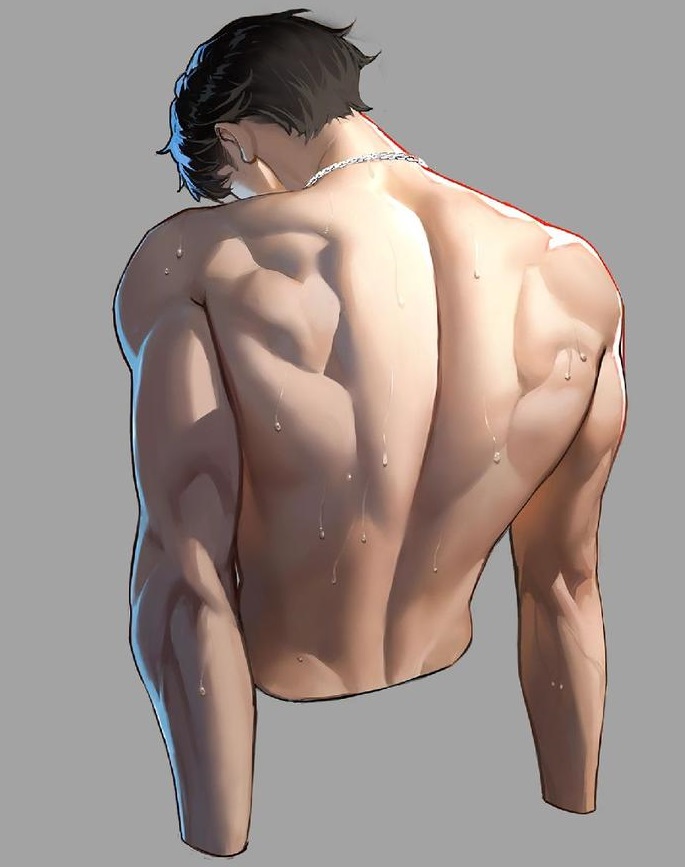
Your muscular male back drawing is now complete!


Leave a Reply